
Engineering a proprietary, potentially more scalable alternative to MDMA
SVN-114 is a preclinical, novel entactogen for post-traumatic stress disorder (PTSD), designed to retain the therapeutically relevant serotonergic profile while designing around MDMA’s limitations.
SVN-114 is preclinical; intended advantages remain to be established.
A medicine designed for healthcare delivery, not simply another MDMA analogue
MDMA-assisted therapy has generated clinical interest in PTSD. But MDMA is not proprietary, and supervised treatment is resource-intensive.
The objective is a medicine designed for healthcare delivery, built around a proprietary molecule.
SVN-114 is investigational and preclinical; intended advantages remain to be established. Sources: Mitchell et al., Nat Med 2023; FDA Psychopharmacologic Drugs Advisory Committee, 4 June 2024; Company programme data.
Serotonin release comparable to MDMA, with a lower dopamine maximum
Same-assay in-vitro monoamine-release data. Both plots use matched axes. The differentiation is the lower maximum dopamine response, not lower dopamine-transporter potency.
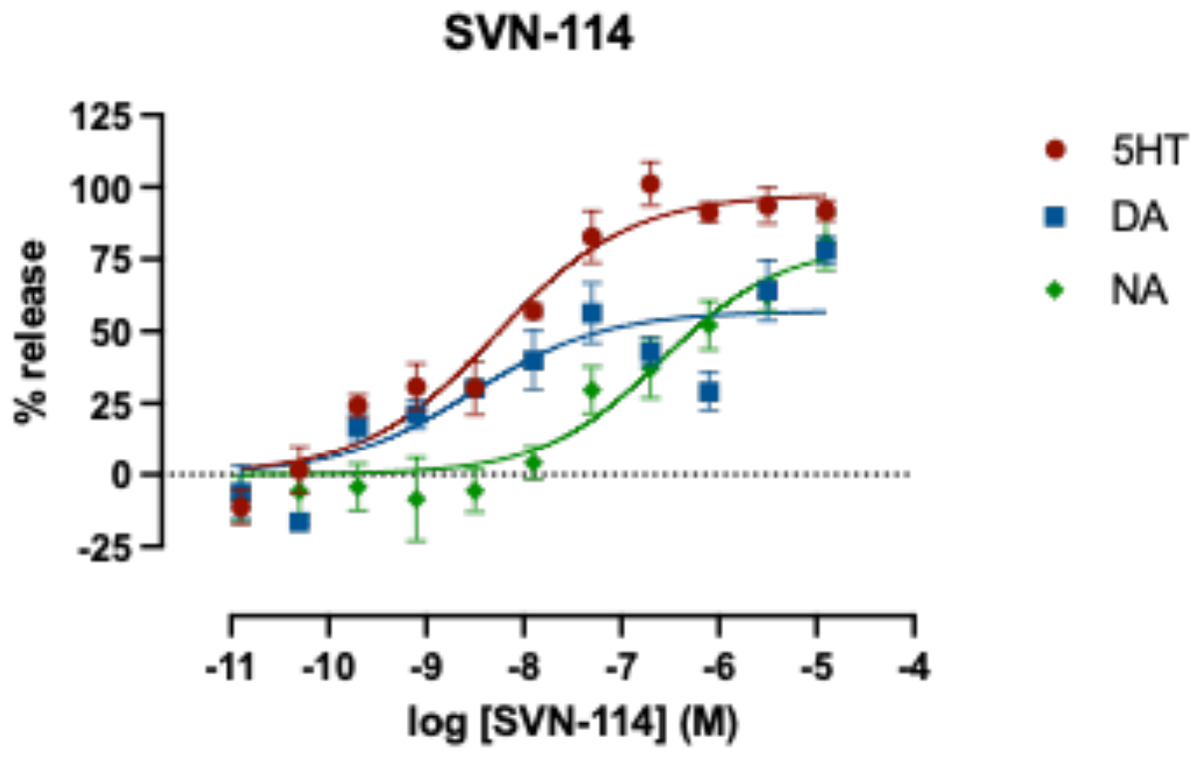
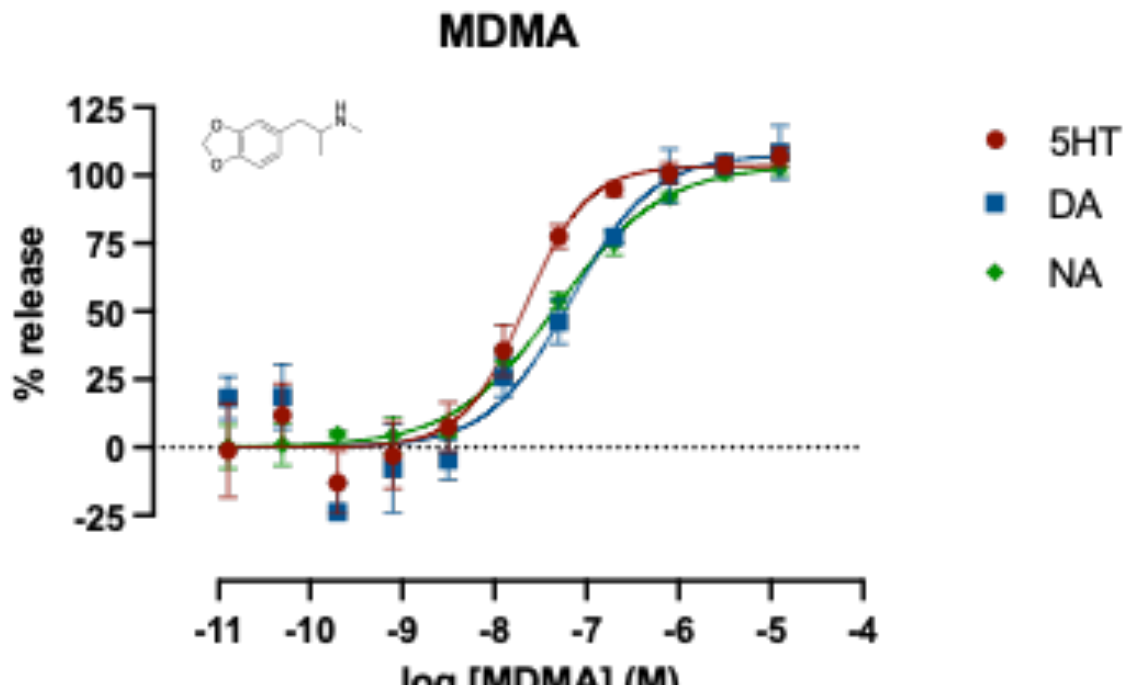
A lower fitted dopamine maximum supports a lower-reinforcement hypothesis; formal abuse-liability testing is required.
Preliminary preclinical findings do not establish human efficacy, improved safety or reduced abuse liability. Source: Company same-assay release data and programme information.
From a six-analogue series to a selected lead
Sources: Solvonis RNS, 10 March 2026; Solvonis Therapeutics plc, NCE programme data, July 2025, including SVN-114 monoamine-release and rat microdialysis results; SVN-114 and SVN-015 programme materials, June 2026; Company data on file. Mitchell JM, et al., Nat Med 2023;29(10), doi:10.1038/s41591-023-02565-4; U.S. Food and Drug Administration, Psychopharmacologic Drugs Advisory Committee meeting on MDMA-assisted therapy for PTSD, 4 June 2024.